

The Difference Between a Network and a Room
I have been to hundreds of networking events.
Breakfast panels where everyone reads from their LinkedIn bio. Happy hours where you collect business cards and follow each other on Instagram and never speak again. Conferences where the most valuable conversations happen in the bathroom line because that is the only place nobody is performing.
I have also built two communities from scratch - one serving 4,000 young women over a decade, and one that I am building right now with women founders and women in business across the Bay Area.
And after all of it - the events, the panels, the communities, the years of watching what actually works and what doesn't - I want to tell you something that the networking industry does not want you to know:
Networking doesn't work. Not for high-achieving women. Not the way it's currently being sold to us.
Let me explain what I mean, and more importantly, what does.
What networking promises
Networking promises connection. It promises opportunity. It promises that if you show up, hand out enough cards, and follow up within 24 hours, something good will happen.
And sometimes it does. A referral here. An introduction there. A client who found you because you happened to be in the right room at the right time.
But here is what networking almost never delivers: belonging. Trust. The kind of relationship where you can say I don't know what I'm doing and I'm scared and have someone in front of you who actually knows your name, knows your business, and knows you well enough to help.
Networking was designed for a different kind of professional in a different era. It was designed for people who needed volume - more contacts, more leads, more exposure. Shake enough hands and statistically something works out.
High-achieving women do not have a volume problem. We have a depth problem. We are surrounded by people and still building alone.
The loneliness nobody talks about
There is a specific kind of loneliness that comes with being a high-achieving woman.
You are competent - often the most competent person in the room. You are driven. You have figured out how to make things work through sheer force of will and an embarrassing amount of late nights. You present well. You hold it together.
And underneath all of it, you are often doing something that is genuinely hard, in a culture that does not always understand why you are doing it, without a single person in your immediate life who truly gets what it costs.
Your friends love you but they don't always understand the business. Your family is proud but they can't advise you. Your peers are competitors in the spaces where you most need honest feedback. And the networking events you attend give you access to a room full of people - none of whom actually know you.
This is not a character flaw. This is a structural gap. And it is one of the most common things I hear from the women I work with and the women in the Collective: I have a lot of people around me and I still feel like I'm doing this alone.
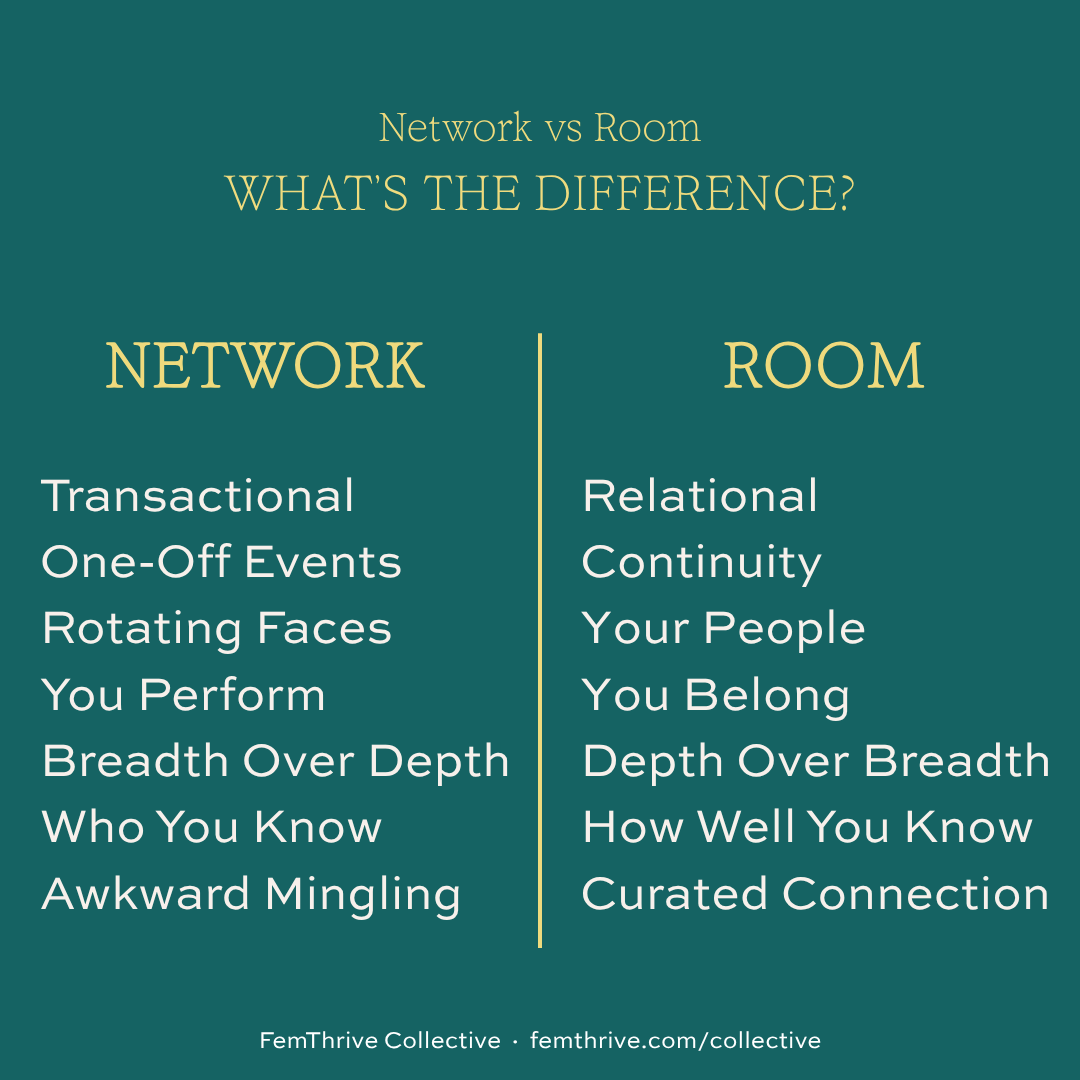
The difference between a network and a room
A network is transactional. A room is relational.
A network is built on breadth. A room is built on depth.
A network optimizes for who you know. A room optimizes for how well you know them.
A network is something you work. A room is somewhere you belong.
The practical difference is this: in a network, you perform. You have your elevator pitch ready. You lead with your wins. You are always, on some level, auditioning.
In a room, the right room, you do not have to perform anything. You can ask the question you are actually afraid to ask. You can say the number out loud. You can admit you have no idea what you are doing in a specific area of your business and have five women immediately offer to help. Not because it benefits them, but because that is the culture of the room.
That is the difference. And it is not a small one. It is the difference between a transaction and a transformation.
What actually works
After fifteen years of building communities and watching what happens when women are in the right room together, I can tell you exactly what creates it.
Curation. The room only works when everyone in it was chosen. Not cherry-picked for status or achievement. Chosen for fit, for intention, for the quality of their character and the depth of their ambition. This is why the most powerful communities almost always have some form of referral or application process. Not to be exclusive. To be intentional.
Continuity. You cannot build a real relationship in a single evening. Trust accumulates across time, across multiple gatherings, repeated interactions, the gradual accumulation of small moments that add up to genuine knowing. The networking model sells you one-off events with rotating casts. What actually works is seeing the same faces, month after month, until they stop being acquaintances and start being your people.
Depth over breadth. A room of thirty women who genuinely know each other is more valuable than a network of three thousand contacts who barely remember your name. Every single time. The research on this is clear and so is the lived experience of every woman who has been in both.
Intentional design. The conversations that change things don't happen by accident. They happen because someone designed the conditions for them to happen. The right prompt at the right moment. The pairing of two women who needed to meet. The activity that cracks open something real. Intentional community design is a skill and it is almost entirely absent from traditional networking. Just ask Priya Parker, author of “The Art of Gathering”.
A reason to exist beyond the event. The most powerful communities live between their gatherings. In the daily messages, the referrals, the check-ins, the resource someone shared because she thought of you. If the community only exists at the event, it isn't really a community. It's just a recurring event.
The room we built
We built the FemThrive Collective because the room I am describing did not exist anywhere I looked.
Not the women's networking groups that were really just leads groups in disguise. Not the masterminds that cost $15,000 and delivered a lot of content and very little community. Not the online groups that were full of people broadcasting into the void and rarely connecting.
I wanted a room where every member was personally referred by someone who believed she belonged. Where the events were designed to move beyond surface connection into something real. Where the community existed year-round, not just at the gatherings. Where the measure of success was not how many members we had but how deeply the members who were there knew each other.
Where a woman could walk in as a stranger and leave as someone who finally had her people.
That is the FemThrive Collective. And watching what happens when women find their room. The decisions they make with more confidence, the businesses they build with more support, the way they show up differently when they know someone is in their corner has been the most meaningful work of my career.

How to find your room
If you are reading this and recognizing yourself in the loneliness I described, if you have a network and still feel like you are building alone, here is what I want you to know:
The answer is not more networking. The answer is better belonging.
Look for communities that are curated rather than open. That have continuity rather than one-off events. That design for depth rather than volume. That exist between their gatherings rather than only at them.
And if you cannot find that community, consider building it. Because the room you are looking for is probably the room someone else is looking for too.
That is always how the best ones get built.
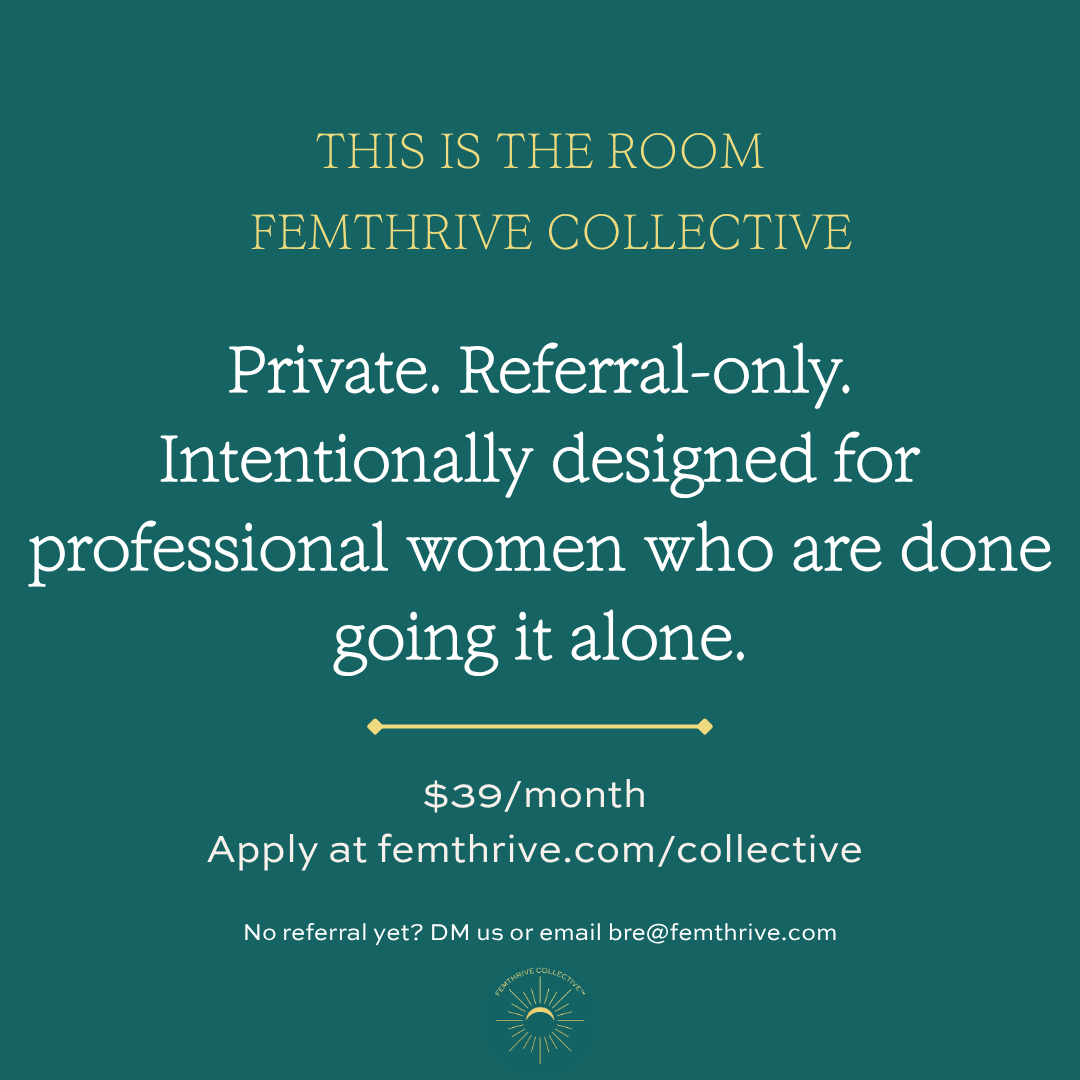
The FemThrive Collective is a private, referral-only membership community for women founders and women in business across the Bay Area. Membership is $39/month. Every member is personally referred and application-approved.
If this is the room you have been looking for, apply at femthrive.com/collective. If you don't have a referral yet, reach out directly at bre@femthrive.com. We will find your way in. 🌿
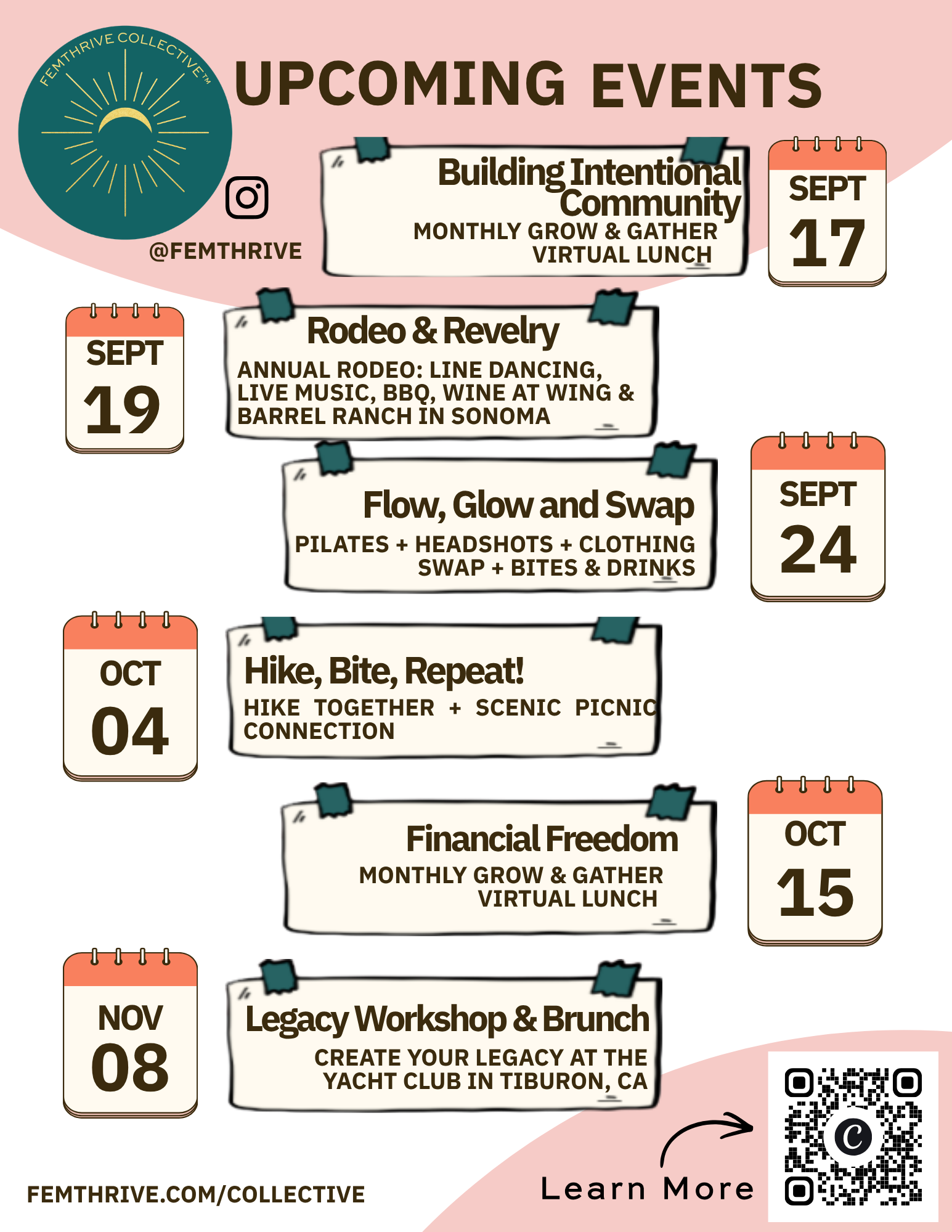
Bre Russell is the founder of FemThrive and the co-creator of the FemThrive Collective. She is a certified business advisor, executive coach, and community builder with 15+ years of experience founding and scaling intentional communities: from a Peace Corps advisory role in Vanuatu to a 4,000-person youth sports company to the FemThrive Collective.